This week has seen a number of major natural disasters hit East Asia. You can read about the tsunami that his Samoa on Tuesday here - this page has links to information on which countries were hit, and an animated guide to tsunamis. This article is about a surfer who survived the tsunami by staying out at sea.
On Wednesday, two major earthquakes hit Indonesia - a magnitude 7.6 followed by a 6.8. So far, the death toll stands at 1 100. You can read about the earthquake and its aftermath here - again, there are many links to other related articles and sites on this page.
Earlier in the week Typhoon Ketswana hit Vietnam, Cambodia and the Philippines, where many people were affected by heavy rain, strong winds and landslides. You can read about it here. Today, the Philippines is being hit by Typhoon Parma, although the capital city, Manila looks like it will escape the worst of it. The BBC report of this typhoon is here.
Away from Asia, the city of Messina on Sicily (Italy) has been badly affected by heavy rain and mudslides. Information and film of this can be found here. So far, the death toll stands at more than 50.
All of these events can be used as case studies for GCSE and A Level. Think about the causes of the disaster, the consequences (social, economic, environmental, political) and the responses (local, national, international).
Saturday, 3 October 2009

Saturday, 5 September 2009
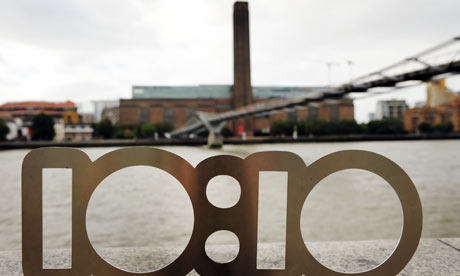
Join the 10:10 Campaign - and get your friends to sign up too!
Friday, 24 July 2009
Changing attitudes in China?

After enforcing the One Child Policy for several decades, are attitudes finally changing in the world's most populous country? Read about what's happening in Shanghai here.
Monday, 13 July 2009
Solutions to Climate Change?

Wednesday, 13 May 2009
Africa - a land of contrasts
These links might help year 7 with their Africa assessment:
Click here for a useful visual summary of contrasts in Africa.
Virtual tourist here (but remember this might not show you everything about Africa, only the bits for tourists!)
Click here for a useful visual summary of contrasts in Africa.
Virtual tourist here (but remember this might not show you everything about Africa, only the bits for tourists!)
Africa - a land of contrasts
View more presentations from HNurton.
Wednesday, 1 April 2009
A New National Park for England
Too Many People?

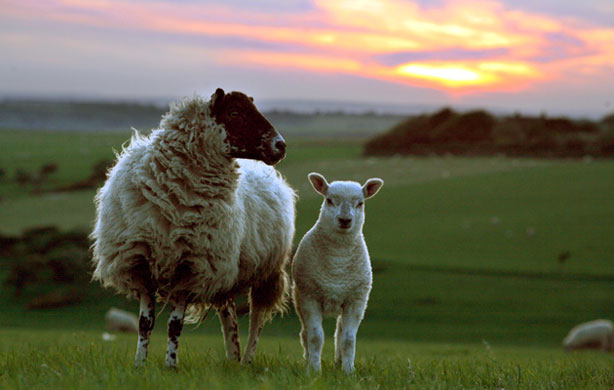
This article on the BBC website may be useful for A2 (Population and Resource Management) and GCSE (Food and Water Supply, and Population Change).
Saturday, 28 March 2009
Earth Hour

Tonight between 8.30pm and 9.30pm, take part in WWF's Earth Hour. We're all being asked to turn our lights out for an hour, to raise awareness about climate change and global warming. There's lots you can do on this website. Watch the video here, too.
Ecotourism
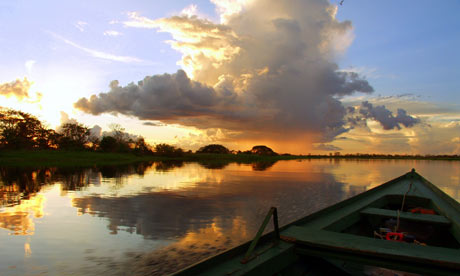
For those of you in Year 11 (and U6?) who are struggling with an Ecotourism case study, try this from today's Guardian Travel section.
Saturday, 7 March 2009
Birth and deaths in real time
Look at www.breathingearth.net which shows birth and death rates by country in real time. It also shows CO2 emissions. Its quite hypnotic really!
Thursday, 5 March 2009
Spotlight - part 2 - exam questions
Here are the exam questions for the spotlight group (and everyone else in Mrs Smith's and Mrs Nurton's groups!)
Spotlight Practice Questions
Spotlight Practice Questions
Sunday, 22 February 2009
AS web links
This school does the same AS course as us and there are loads of useful website links listed. They don't do the 'Health' human option (which we do) but there are loads of useful links for all the other topics.
Wednesday, 18 February 2009

Tuesday, 17 February 2009
Why are there 3000 abandoned cars at the airport in Dubai?
This article from the New York Times details the mass exodus of foreign workers (who make up 90% of Dubai's population) due to the global economic downturn. Definately worth reading for an up-to-date example of migration!
Wednesday, 14 January 2009
Case study card
Use this blank to do your case studies on. Remeber, you can alter / amend some of the sub-headings depending on the specific case study. To download it click on the 'ipaper' word at the top of the document.
GCS Case Study Card
GCS Case Study Card
Year 11 Case Studies

Wednesday, 12 November 2008
The Future of the Maldives

The Maldives are a group of low lying coral islands in the Indian Ocean that rely on tourism to keep their economy going. The islands and the people who live their are likely to be some of the first casualties of global warming - it will create many environmental refugees here. The President of the Maldives is trying to plan for the future. You can read about what he is trying to do here. You can listen to his proposals here.
Our Increasing Life Expectancy

I found these maps on the BBC website which show how longevity (people living for a long time) has spread north throught he UK. You can see the article and the maps here. What implications does this have for our society in the future?
Monday, 15 September 2008

10 Ways to Google-up your coursework

Ten ways to use Google Earth to improve your coursework - some fabulous ideas from Noel Jenkins at Juicy Geography. I've just told all my group to draw desire line maps..... how about doing it in Google Earth?
Click here to see all 10 suggestions.
Thanks to Noel Jenkins for sharing this!
Friday, 12 September 2008
Atlantic Hurricanes

2008 was forecast to be a busy hurricane season. You can see the predictions that were made in August here. The hurricane currently wreaking havoc in the Caribbean and threatening Texas, is Hurricane Ike - this one has already hit Cuba and Haiti, and is now heading for the USA. You can see the damage it has already done in the Caribbean here, and video footage of the enormous waves lashing Texas as the hurricane approaches, here. Accounts of the devastation that Ike has caused in Haiti, the poorest country in the Caribbean, can be found here. Haiti has already been hit by several tropical storms this season. You can follow the progress of this season's hurricanes on the National Hurricane Center website.
Wednesday, 13 August 2008
Sunday, 6 July 2008
Mission Explore!

What are you going to do over the Summer? You should get out more!
Go to Mission Explore and take on a challenge this summer......
Friday, 30 May 2008
Global Food Crisis
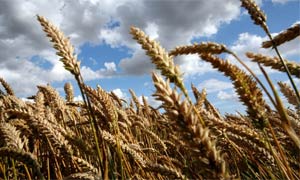
All this week, the Guardian newspaper has been doing special reports on the global food crisis. There are some excellent case studies, and useful information for A2 students - Year 11 should look too, as this is all relevant to the Food and Water Supply unit. The website is here - there is a particularly good interactive guide here.
Wednesday, 28 May 2008
Pisa's leaning tower 'stabilised'

An interesting story for those studying Italy in Year 7. Click here to read the story from the BBC website.
Thursday, 15 May 2008
Barcelona Water Shortage

Barcelona, Spain's second city, is suffering from a chronic water shortage. This week, they have announced how they are dealing with this. You can read about it here. This will be a useful case study for Year 10s who will be doing the Food and Water Supply unit soon.
Cyclone and Earthquake Update
The BBC now has in depth areas on its website for both of the natural disasters that have hit Asia this month. There are many useful links from these pages.
Cyclone Nargis
China Earthquake
Cyclone Nargis
China Earthquake
Tuesday, 13 May 2008
Earthquake in China

More bad news from Asia - a magnitude 7.9 earthquake has struck the SW of China. A day after the quake, the death toll stands at 12 000, but this figure is likely to rise. You can read about this disaster here and here. There are some pictures from China here - the BBC warns that you may find some of them disturbing.
There is an interesting article here about the contrasting responses to this disaster and the cyclone in Burma.
Sunday, 11 May 2008
Cyclone Nargis

It is now over a week since Cyclone Nargis hit Burma in South East Asia. The death toll is likely to be the highest from a tropical storm for many years, and the disaster is far from over. You can look at an interactive explanation of what happened here. For an explanation of the causes of tropical storms, look here. For general information about the disaster, there are up to date news stories here and here. If you want to find out how you can donate to the disaster fund, click here.
Subscribe to:
Posts (Atom)


